Making Prompt Engineering Invisible
Prompt crafting is a skill most people lack but everyone needs. The interface should close that gap — automatically.
100k+
Prompts managed and enhanced
55+
AI platforms supported at launch
3×
Faster prompt iteration for power users
Most people using AI tools get mediocre results — not because they lack intelligence, but because they lack vocabulary. Prompts are the interface between human intent and machine output, but nobody teaches you how to write them.
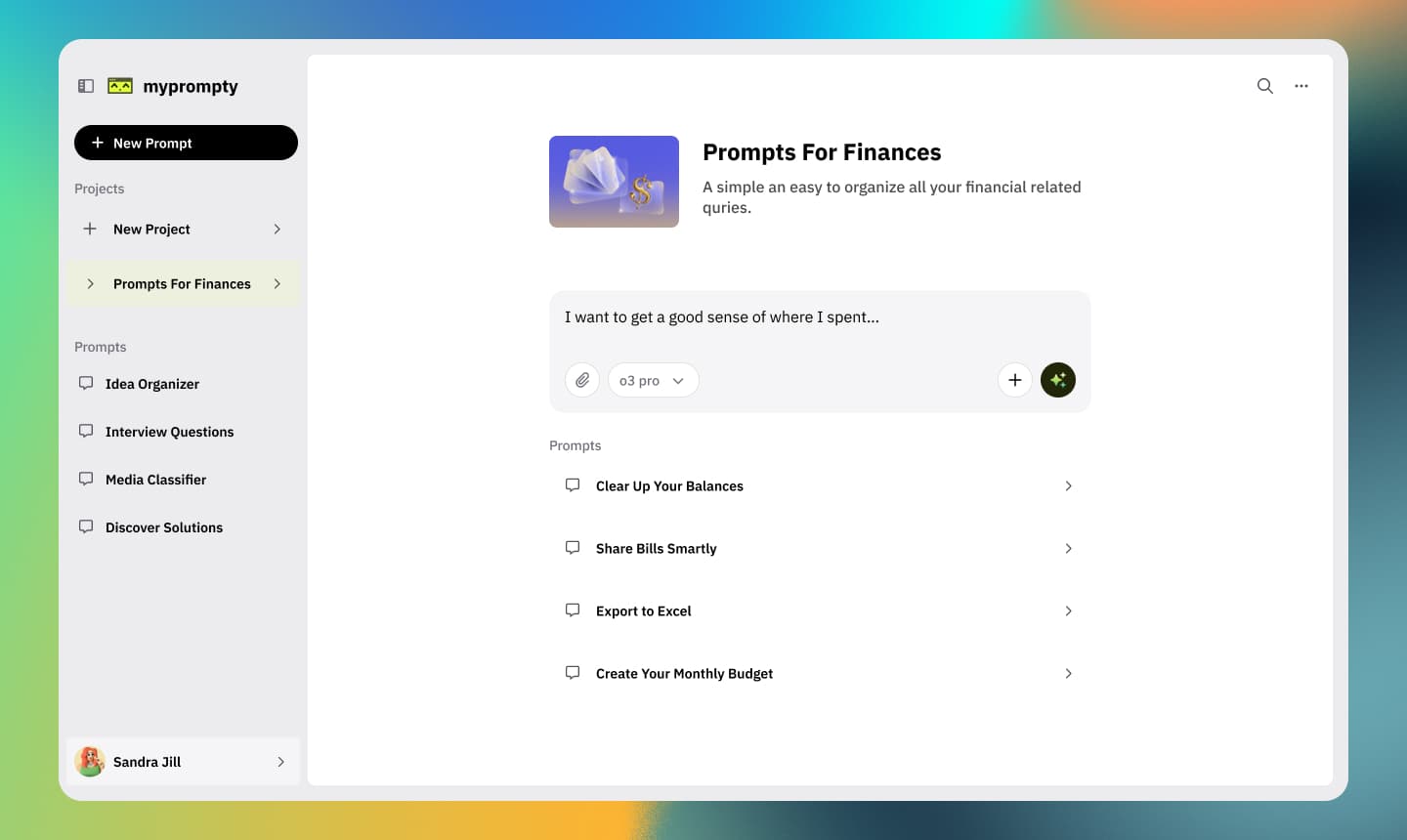
The market has thousands of "prompt libraries" — static collections of copy-paste text. Prompty was designed around a different insight: the best prompt isn't stored somewhere, it's generated from context. The design challenge was making that generation feel instant and effortless.
Prompt Builder
Designed the structured prompt composition interface — variables, role templates, and chain-of-thought scaffolds for power users and beginners alike.
Cross-Platform Sync
Built the multi-platform connector UX. 55+ integrations with a single source of truth for your prompt library.
AI Enhancement Layer
Designed the AI-assisted improvement flow — automatic rewrites, clarity scoring, and output prediction before you run a prompt.
Sharing & Discovery
Created the community prompt marketplace — forking, remixing, and rating flows for a growing library of 100k+ expert prompts.
Version Control
Designed prompt version history — diff views, rollback UI, and A/B testing patterns for iterative prompt engineering at scale.
Analytics Dashboard
Built the usage analytics dashboard — token cost tracking, output quality metrics, and performance comparisons across AI models.
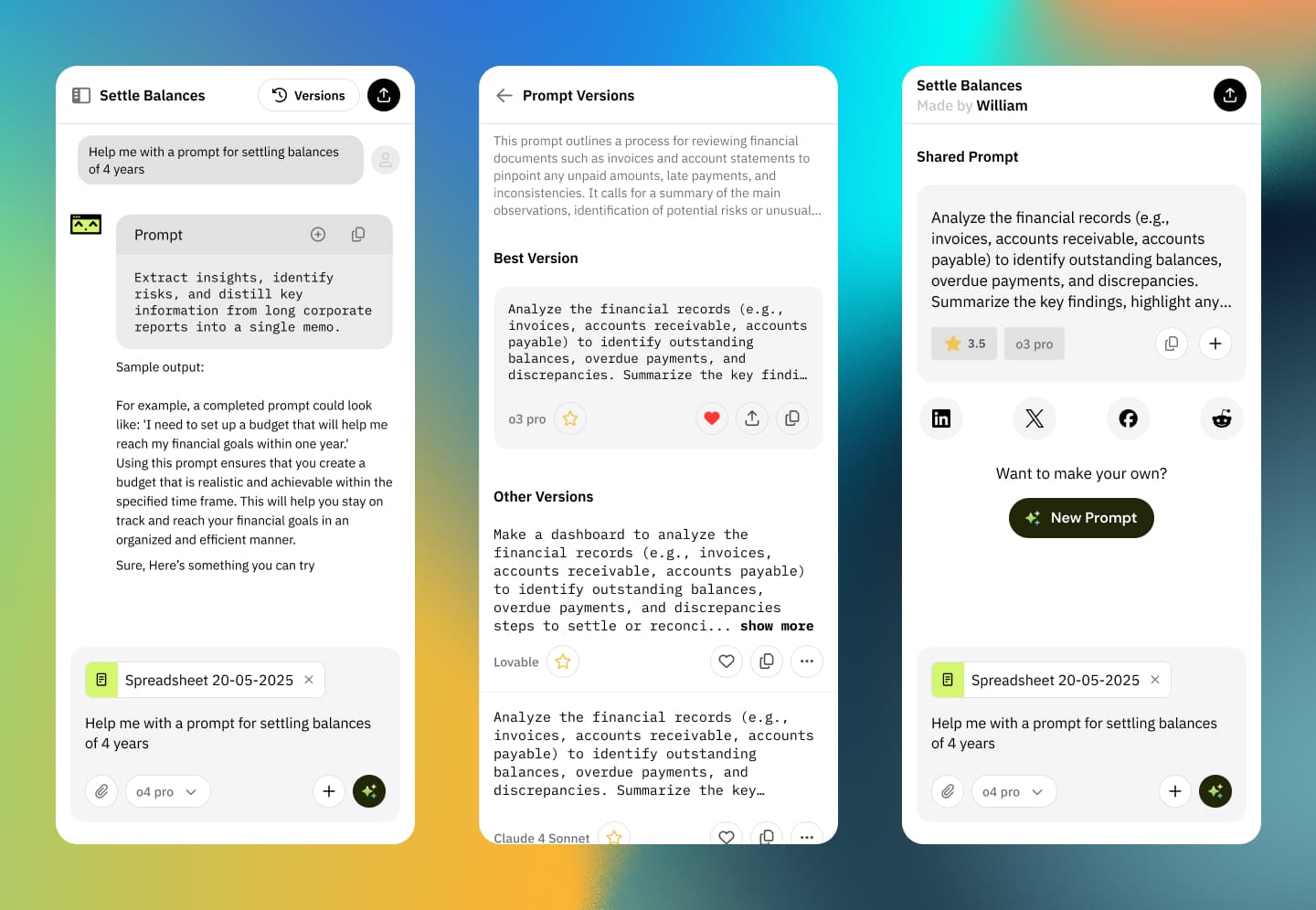
Prompty's tokens, type scale, and rules as a design.md — drop it into Cursor, Claude Code, or v0.
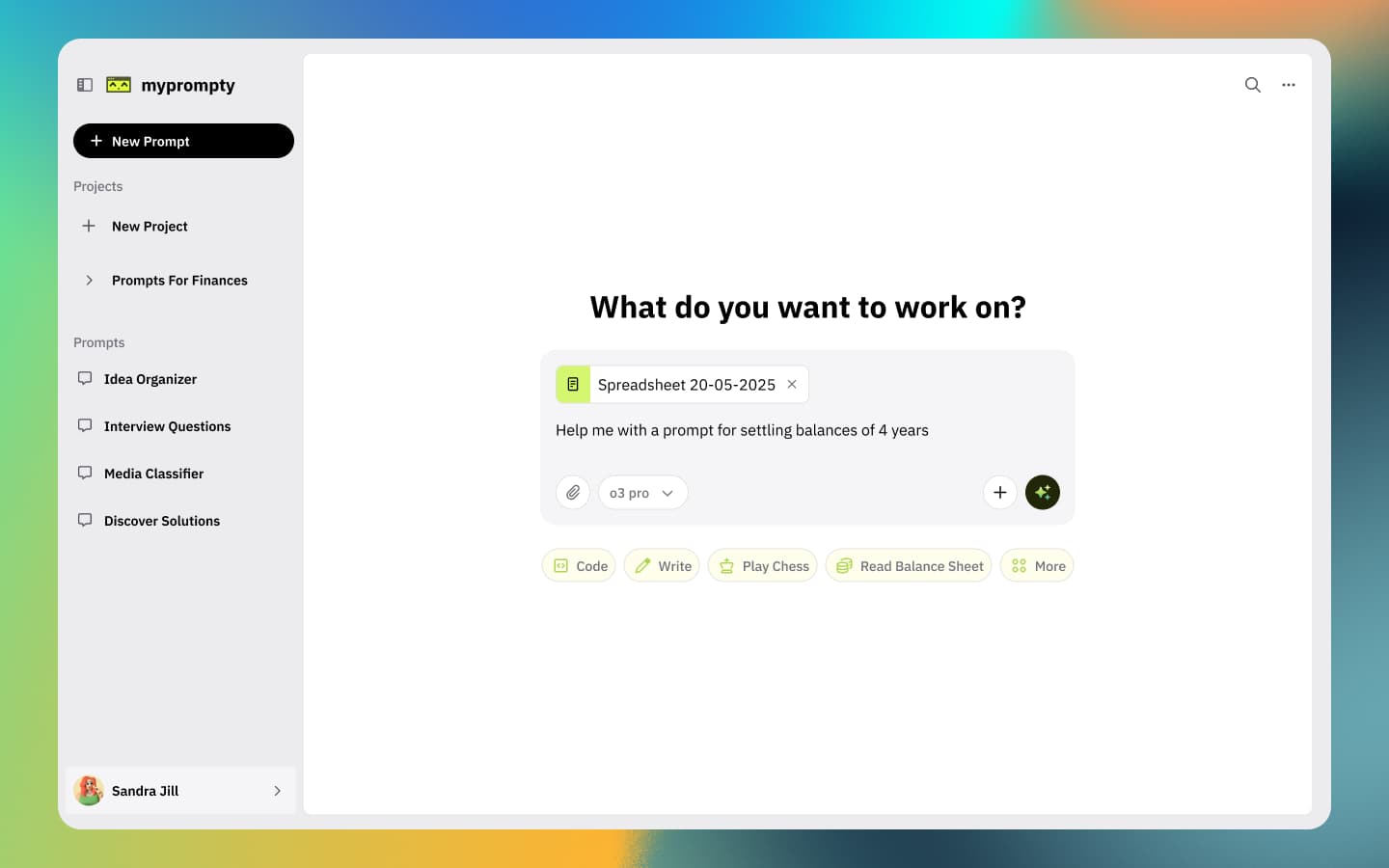
Designed for the browser, the web, and mobile — one creation experience everywhere.
From Intent to Optimised Prompt
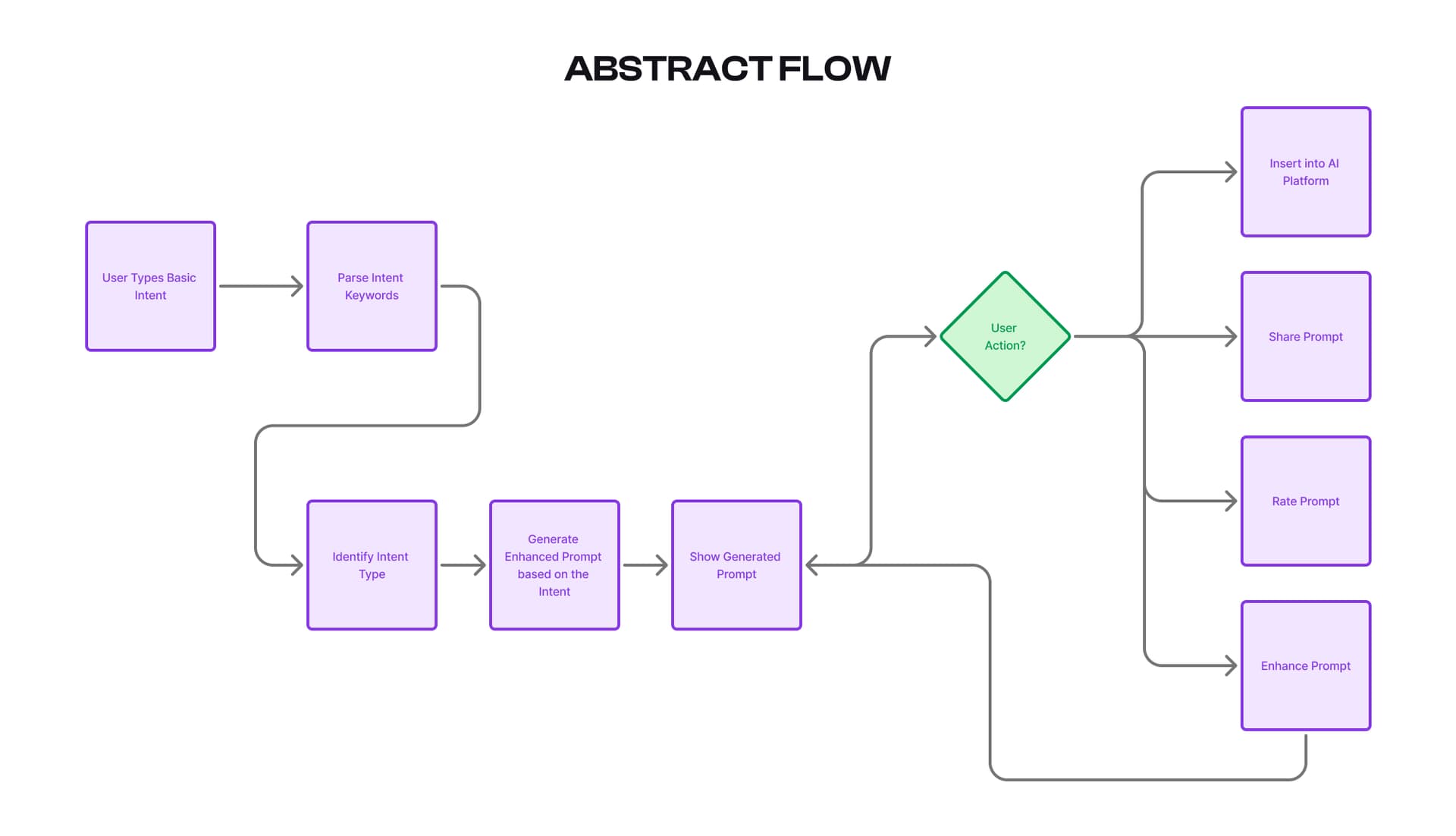
The core interaction is deceptively simple: the user types what they want to achieve, and Prompty produces the optimal prompt for the platform they're using. But the design behind that interaction involved mapping 55+ platform vocabularies, designing a progressive disclosure flow that hides complexity until it's needed, and creating a feedback loop so users could see their prompt improve in real time. I ran 12 prototype tests before the creation flow felt inevitable.
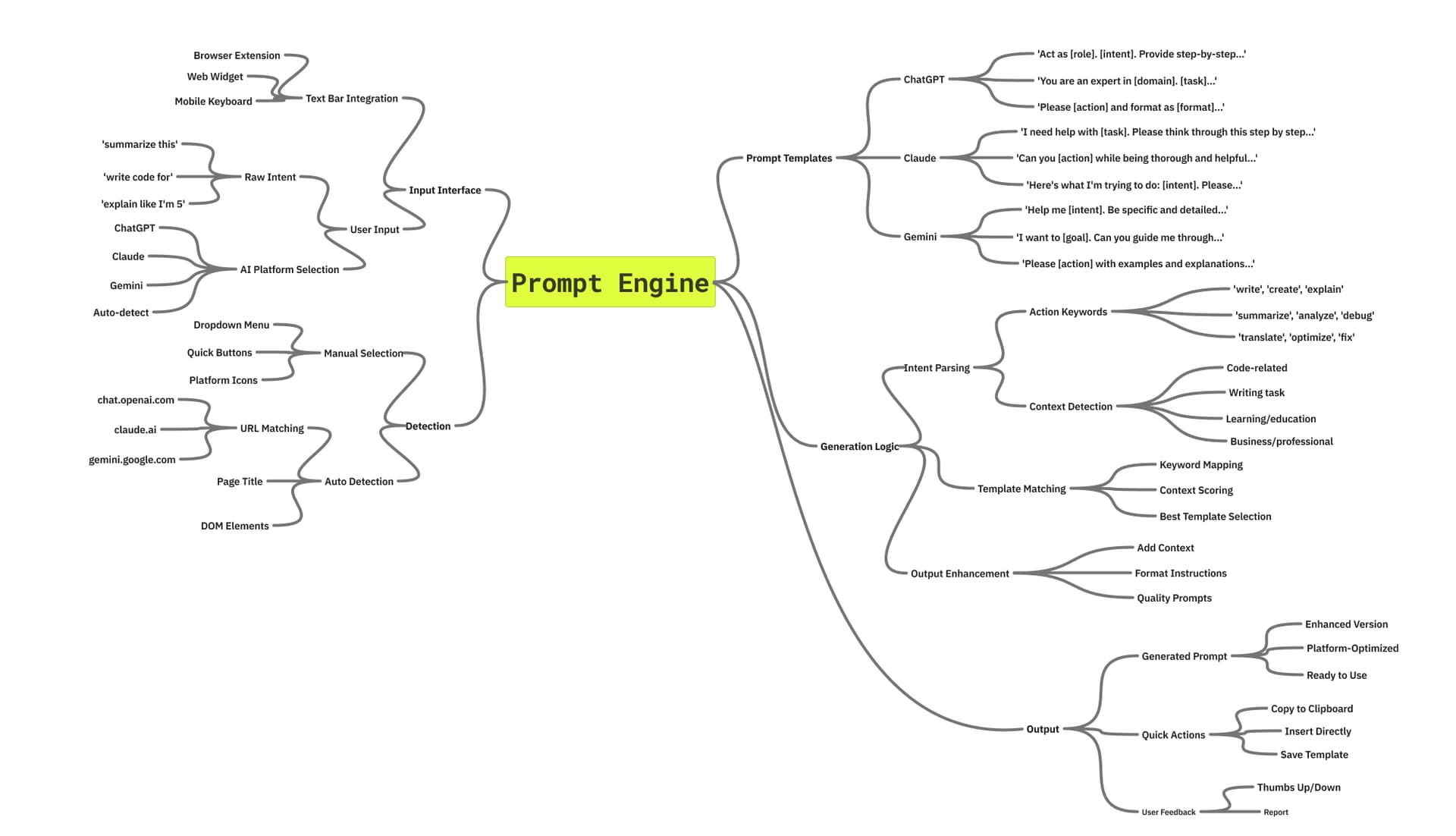
Cross-Platform Context Detection UI
When the browser extension activates, the user needs to know immediately which AI platform has been detected and how their prompt will be optimised differently. I designed a compact detection panel that communicates platform context, active template category, and enhancement mode in under two seconds — without interrupting the user's existing workflow. The visual language pulls from the host platform's own aesthetic so the extension feels native, not foreign.
Template Library Information Architecture
A library of 100k+ prompts is useless without structure. I designed the information architecture around use-case clusters (not platform categories) because users think in terms of "I want to write a cold email" not "I need a GPT-4 prompt." The library uses progressive refinement — broad category first, then platform, then tone — with a "quick-fill" shortcut that skips the hierarchy for returning users.
"Incredibly swift at turning ideas into real product — building the prompt engine from the ground up."
Next Project